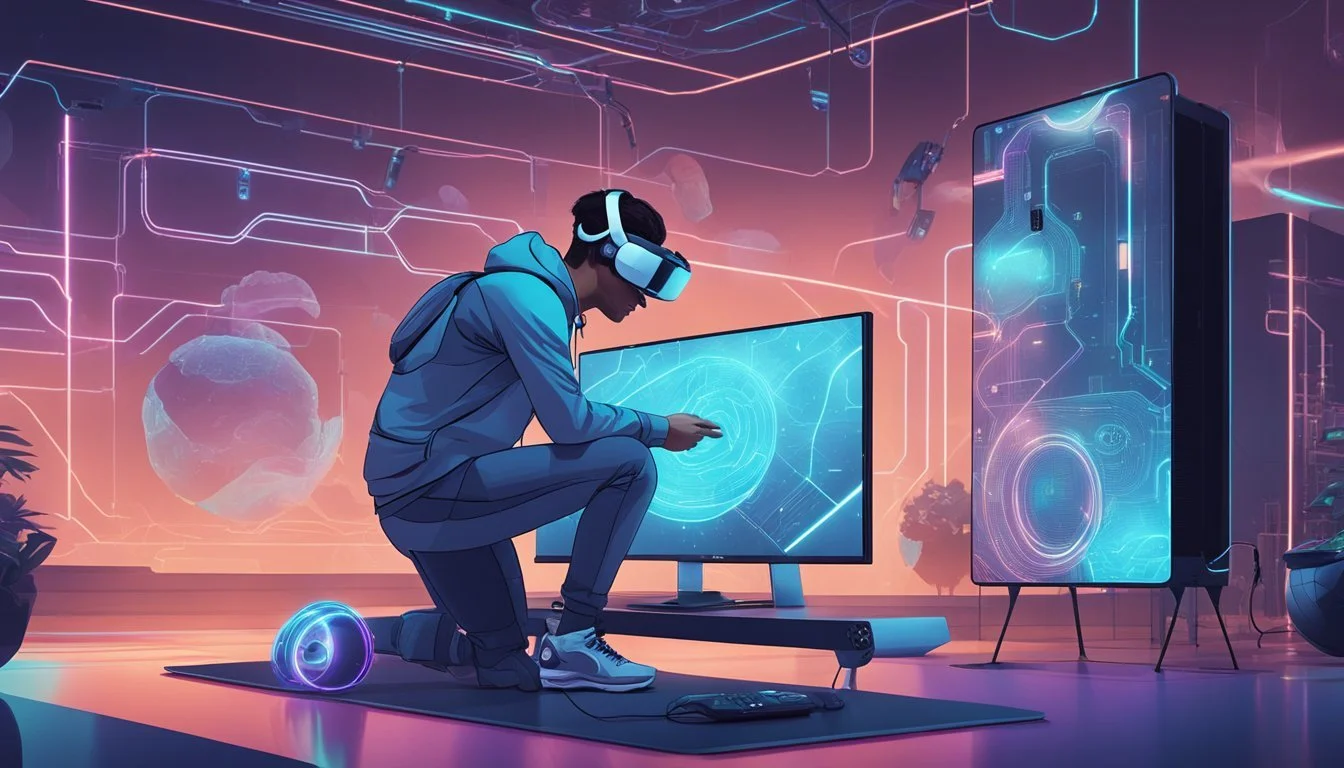
Neuralink & Gaming: Revolutionizing Immersion with Thought Control
The gaming world stands on the precipice of a monumental shift, one that promises to redefine how players interact with virtual environments and achieve unprecedented levels of immersion. At the heart of this transformation is Neuralink, Elon Musk's ambitious venture into brain-computer interface (BCI) technology. With recent breakthroughs including successful human implantation, the concept of neural interface gaming is no longer confined to science fiction; it's rapidly becoming a tangible reality.
Imagine navigating complex virtual worlds, executing intricate maneuvers, and even communicating with other players not through a joystick or keyboard, but with the sheer power of your thoughts. This revolutionary promise is what Neuralink brings to the table, heralding an era where the divide between player and game blurs, offering a level of responsiveness and engagement previously unimaginable. The implications for the gaming industry are profound, suggesting a future where traditional controllers might become relics of the past, replaced by direct neural connections that facilitate seamless interaction.
The Dawn of Thought-Controlled Gaming: A Neuralink Revolution
Since its inception in 2017, Neuralink has been charting an ambitious course to bridge the gap between human consciousness and digital interfaces. The company's vision, championed by Elon Musk, centers on creating a high-bandwidth, bidirectional communication channel between the brain and external devices. This groundbreaking work has culminated in the development of sophisticated brain-computer interface technology, poised to transform numerous fields, particularly entertainment.
The core of Neuralink's innovation lies in its Link device, a small, wireless brain implant designed for minimally invasive surgical implantation. This remarkable piece of engineering boasts thousands of flexible electrode threads, each capable of detecting neural signals with incredible precision. Custom-designed chips process this vast amount of data, which is then transmitted wirelessly, ensuring a seamless connection to external devices. The device's long battery life further underscores its practical application, making it suitable for continuous use.
The gaming industry has been quick to recognize the immense potential of these advancements. Early reports from human trial participants, who received the Neuralink implant in early 2024, offer compelling evidence of this future. Users have successfully demonstrated the ability to play sophisticated games, such as Counter-Strike, using only their thoughts. This remarkable achievement showcases the raw power of Beyond Controllers: How Neuralink Is Redefining Gaming Experience, where direct neural input translates into precise in-game actions, heralding a new era of interactive entertainment.
Neuralink's Journey: From Bold Concept to Pioneering Human Trials
Neuralink's path to enabling thought-controlled gaming has been a journey marked by relentless innovation, rigorous scientific development, and careful navigation of complex regulatory landscapes. Elon Musk's founding vision was clear: to create a direct interface between the human brain and computers, unlocking potential across healthcare, communication, and, significantly, entertainment.
The development of the Link device itself has been a testament to rapid technological progress. From early concepts, Neuralink has miniaturized the technology while vastly improving its capabilities. The design ensures that thousands of electrode threads can be precisely implanted into the brain, each meticulously placed by a sophisticated robotic surgical system. This precision is paramount for both safety and functionality, allowing the device to effectively "listen" to the electrical signals of the brain.
Before reaching human trials, Neuralink underwent extensive animal testing, including successful implantations in pigs and monkeys. These trials were crucial for validating the safety, reliability, and functionality of the Link device. This thorough testing laid the groundwork for the most significant milestone to date: FDA approval to commence human clinical trials in 2023. The subsequent implantation of the first human participant in early 2024 marked a pivotal moment, with initial results demonstrating promising capabilities in controlling external devices, including computers and games, purely through thought. This progression from concept to a functional, implanted device underscores the rapid evolution and serious intent behind Neuralink's mission to bring neural interface technology to the forefront.
Unlocking Unprecedented Immersion and Accessibility in Gaming
The advent of neural interface gaming promises to elevate the player experience to a level previously confined to the realm of science fiction. The most immediate and profound impact will be on immersion. By allowing direct thought-to-action control, the mental barrier between player intent and in-game execution virtually disappears. Imagine focusing your concentration to cast a spell, aiming with your will, or intuitively moving your character without the clumsy intermediary of buttons or analog sticks. This direct cognitive link fosters a deeper, more personal connection to the virtual world, making the experience feel less like playing a game and more like truly existing within it.
Beyond immersion, the technology offers unparalleled responsiveness. Input lag, a perennial concern for competitive gamers, could become a thing of the past. Actions would register instantaneously with the speed of thought, providing a level of precision and reaction time that mechanical controllers simply cannot match. This could fundamentally alter competitive esports, demanding not just fast reflexes, but heightened mental focus and control.
Crucially, Neuralink's technology also holds immense potential for accessibility. For individuals with limited mobility or disabilities that hinder the use of traditional controllers, neural interface gaming opens up a vibrant new avenue for participation and enjoyment. Games that were once inaccessible could become fully playable, empowering a wider demographic of players to engage with the virtual worlds they love. This inclusive aspect underscores the truly revolutionary nature of this technology, extending the joy of gaming to everyone.
Furthermore, developers will gain entirely new palettes for game design. Imagine games that adapt dynamically to your emotional state, sensed directly from your neural activity, or puzzle games that require specific thought patterns to solve. The possibilities for innovative gameplay mechanics are boundless, allowing creators to craft experiences that are not only deeply immersive but also uniquely responsive to the player's cognitive state. This shift marks a significant leap Beyond Controllers: How Neuralink Is Redefining Gaming Experience, moving towards a future where games understand and react to us on a profoundly personal level.
The Road Ahead: Challenges and Ethical Considerations for Neural Interface Gaming
While the prospect of thought-controlled gaming is undeniably exciting, the journey to widespread adoption of neural interface gaming is paved with significant challenges and complex ethical considerations. One primary hurdle remains the technical refinement and long-term stability of the implants. Ensuring the device's reliability over decades, minimizing potential health risks, and addressing issues like signal degradation or device maintenance will be critical. The invasiveness of a surgical implant, however minimal, also presents a psychological barrier for many potential users, making public trust and perception paramount.
Beyond the technical, ethical concerns loom large. The direct interface with the brain raises profound questions about privacy and data security. What kind of neural data will be collected, how will it be stored, and who will have access to it? The potential for "mind-hacking" or unauthorized access to a user's thoughts and intentions, however distant it may seem, necessitates robust security protocols and stringent regulatory oversight. There are also broader societal implications to consider, such as the potential impact on human autonomy, identity, and the very definition of consciousness if such technology becomes ubiquitous.
The "Frontiers" research paper highlights that brain-computer interfaces are "not ready for the general public," a sentiment that echoes the cautious approach needed. This isn't just about functionality; it's about societal readiness, regulatory frameworks, and addressing fundamental questions about human-computer interaction at its most intimate level. Building public confidence will require transparent development, clear communication about risks and benefits, and robust ethical guidelines developed in collaboration with experts from various fields, not just technology.
Finally, the cost and accessibility of such advanced technology will be a significant factor in its widespread adoption. For neural interface gaming to truly revolutionize the industry, it must eventually become affordable and available to a broad audience, not just a privileged few. Navigating these multifaceted challenges will determine how quickly and safely we transition into this bold new era where Neural Interface Gaming: Is the Future of Mind Control Here? becomes an everyday reality.
Conclusion
The journey towards thought-controlled gaming with Neuralink represents one of the most exciting and transformative frontiers in human-computer interaction. From Elon Musk's audacious vision to successful human trials, the progress has been rapid and compelling, hinting at a future where the virtual world responds directly to our thoughts, offering unparalleled immersion and accessibility. While significant technical, ethical, and societal challenges remain, the promise of neural interface gaming is too profound to ignore. As this technology continues to evolve, it will undoubtedly redefine our relationship with digital entertainment, pushing the boundaries of what it means to play, experience, and truly inhabit virtual realities. The revolution has begun, and the gaming world watches with bated breath.